Vision
Design industrial models that reduce dependence on petroleum-based packaging and create useful local value.
FAQ · Pelican Project
Answers to help you plan local bottle manufacturing and water bottling.
Figures are indicative planning references. Specifications and final scope are confirmed for each project.
Pelican Project develops local factories to manufacture bio-based bottles and, depending on the project, fill them with water. Support covers business planning, product design, factory sizing, equipment, installation and training.
A coordinated industrial solution from feasibility to start-up. The final offer defines the equipment supplied, services included and work to be completed locally.
Yes. Project A produces empty bottles; project B manufactures and fills water bottles; project C combines both activities.
Yes. The factory can serve your own brand or private-label customers. Formats, volumes and production changeovers are assessed together.
Yes, following an assessment of the equipment, site, material and filling line. Adapting an existing facility may be suitable.
These supply options can be assessed, including for trials or local bottle blowing. Prices, minimum quantities, availability and shipping depend on the product and destination.
Pelican assesses international projects, especially islands, tourism destinations, local water producers, hotels, restaurants and premium distributors. The priority is to manufacture, fill and sell close to the market.
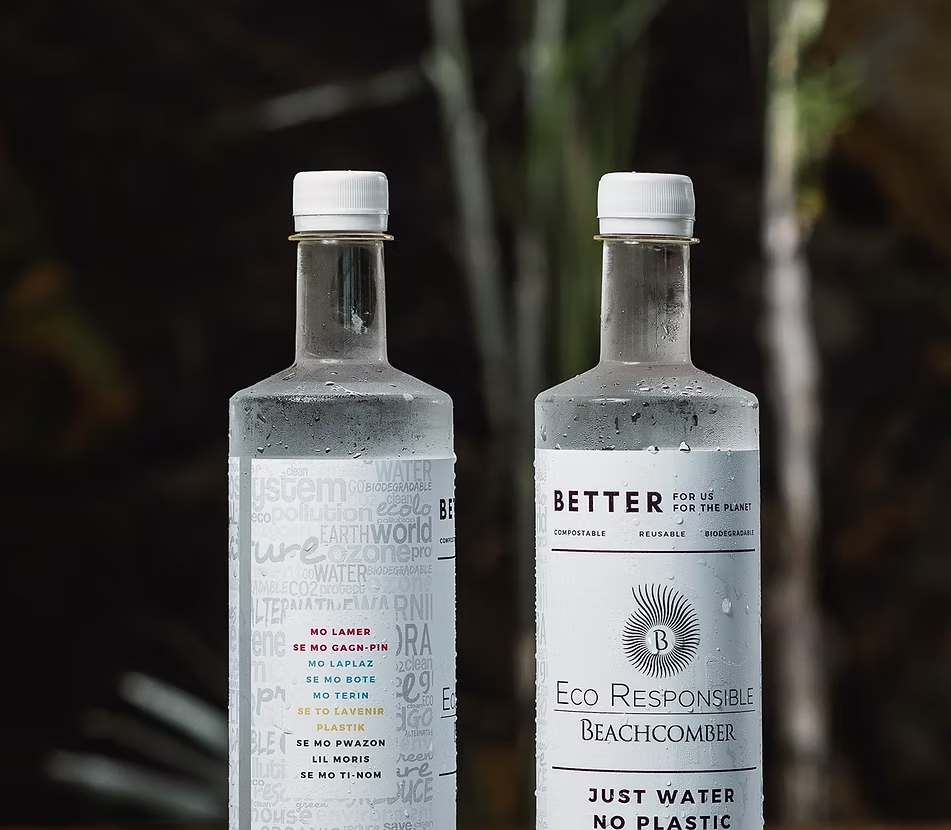
The bottle uses a biopolymer derived from renewable plant resources. The selected grade, origin and formulation are specified in the project documentation.
Pelican’s formulation target is 99% ± 1% for the bottle body, to be confirmed against documentation for the selected formulation. Caps, labels and secondary packaging are assessed separately.
Bio-based describes the renewable origin of a material. Biodegradable describes biological conversion in a defined environment and under defined conditions. Compostable adds requirements for disintegration and compost quality. These terms are not interchangeable.
Industrial compostability of a material does not demonstrate home compostability. A home-composting claim requires appropriate evidence for the finished product.
There is no universal degradation time. Tests on a different formulation or product do not establish this bottle’s behaviour. Claims must match the available evidence and the relevant environment.
Yes, the plant-based biodegradable and compostable material used is recyclable in a suitable dedicated process. A modelling study published in 2026 predicts, at the current market levels assessed, a residual presence of this material of 0.00078% in the PET bottle stream after sorting, well below the study’s reference threshold of 0.1%. Under the conditions studied, this low presence is therefore not expected to disrupt PET recycling. The findings concern the material studied and the modelled sorting systems; local disposal instructions still apply.
Yes. The life cycle assessment shows that the plant-based bottle assessed has a lower carbon footprint than the glass and PET bottles compared, with lower greenhouse gas emissions. This conclusion applies to the formats and scenarios studied. Each project’s carbon footprint is then refined according to bottle weight, energy, transport and end of life.
Source: November 2024 life cycle assessment — comparison of six bottles.
Preferred sizes are 330 ml, 500 ml, 750 ml, 1 L and 1.5 L. Other volumes can be assessed against the design, equipment and intended use. Each format requires technical validation.
Yes. Design follows the business plan and defines the shape, volume, weight, neck finish and identity of the product to be sold.
Yes, provided you hold the necessary rights. Pelican then checks feasibility against the material, preforms, blowing process and filling line.
These options can be considered during development. Colourants, geometry and embossing are checked against processing, food-contact requirements and product performance.
Usage rights, exclusivity, file delivery and physical mould ownership are specified in writing. Paying for a mould or design service does not by itself define a transfer of all design rights.
Trials or samples can be assessed according to available tooling and the requested product. Costs, quantities and timing are quoted before production.
The neck finish, cap, tamper evidence and capping equipment are specified together. Labels, printing or sleeves are assessed for the product. Bio-based or compostable claims for the bottle body do not automatically cover these components.
A preform is the injection-moulded part with the bottle’s final neck finish. It is then heated and blown inside a mould to create the final bottle shape.
There are two options: integrated manufacturing from granules, or buying preforms for local blowing. The business plan compares investment, purchase cost, logistics and autonomy.
Yes, if this expansion is planned when choosing preforms, moulds, the building and utilities. This allows a phased start-up to be assessed.
Alternative supply must meet the validated formulation, traceability, preform specification and process requirements. Compatibility needs to be checked before use.
Start with the number of bottles multiplied by their weight, then adjust for process losses and scrap. For example, one million 30 g bottles requires 30 tonnes before those adjustments.
The material is supplied as granules, packed in big bags of about 700 kg. Shipping and container loading are arranged according to the ordered quantities, destination and logistics requirements.
These are specified for the selected material or preform. Safety stock reflects shipping time and consumption. Storage follows supplier instructions, particularly for moisture and storage life.
In an integrated factory: material preparation and drying, preform injection, bottle blowing, then filling and packing where the project includes bottled water.
The injection press makes preforms; the blowing machine turns them into bottles. Buying preforms allows a project to start with blowing without an injection press.
Reference configurations include the main production auxiliaries. The quotation specifies drying, cooling, robot, conveyors, compressor and related systems, together with connections to be prepared on site.
Moulds define the preform and bottle shape. Reference planning uses 16 injection cavities and 2 blowing cavities, subject to product and equipment validation.
Yes, with suitable tooling and settings. Scheduling includes changeover time; the planning assumption is about one hour for injection and one hour for blowing per changeover, to be confirmed in operation.
Clean scrap can be ground and its reuse assessed with validated parameters. Reuse rates must preserve quality, traceability and food-contact suitability.
Staffing depends on equipment count, automation and shifts. The business plan covers production, filling, maintenance, logistics and quality control. Local operators receive start-up training.
Mains water, boreholes, wells or springs can be assessed, with appropriate analysis and permits. An atmospheric water generator is another option to assess for the site.
Treatment is defined from water analysis, required flow and intended use. Prospects do not need to select filtration, reverse osmosis, UV or other processes themselves.
This can be assessed against climate, energy, storage and production continuity. Combining it with another water source can also be considered.
The reference module has a nominal capacity of 10,000 L/day. Actual output depends particularly on temperature and humidity. Unit count is assessed against site conditions and daily demand.
The reference line covers rinsing, filling, capping, marking, conveyors and cap feeding. Labelling, secondary packaging and palletising are defined in the final scope. The sizing reference is a maximum of 2,500 bottles/hour per line.
Yes, after checking the neck finish, cap, geometry, conveyors, temperatures and throughput. Any adaptations are identified before approving the configuration.
The reference offer focuses on still water. Sparkling water, hot drinks, juices, hot filling or aseptic filling require a specific assessment; compatibility cannot be assumed.
There is no single standard factory capacity. Sizing starts with annual demand per format and the work schedule. The economic suitability of a small output is checked in the business plan.
At each stage, volumes are converted to production hours using the format’s throughput, then compared with available time. Changeovers, maintenance and downtime are included.
Injection and blowing have different throughputs. Machine counts are calculated separately for each stage to meet the required output.
Machines producing the same format at the same time each need the matching tooling. One mould cannot operate on two machines simultaneously.
This planning limit reserves about one hour for maintenance and one hour for downtime in a 24-hour day. It represents a maximum across several shifts, not an individual operator’s working day.
Planning considers operating days first, then one, two or three shifts with a reference maximum of eight hours per shift. The actual schedule is adapted to the country, staffing and seasonality.
Yes. Machines, moulds, formats or lines can be added after checking space, utilities and material flows. Planning for expansion from the outset makes it easier.
About 1,000 m² is an initial planning reference for a complete factory. Final space depends on equipment, stocks, laboratory, access and logistics flows.
Yes. Clear height, floor slab, loading, doors, truck access, hygiene, ventilation and connections need checking. Drawings and photos are useful for an initial assessment.
Layout constraints can be assessed using building drawings and the planned configuration. The scope of this assessment and local checks are defined for the project.
Installed power, consumption and motor starting requirements are calculated from the final equipment list. Voltage, frequency and three-phase supply must match the site.
Yes, depending on the machines. Pressure, flow, air quality and cooling capacity are specified during engineering. Supplied equipment and site networks are detailed in the offer.
Requirements depend on climate, equipment heat and storage and hygiene needs. Ventilation and temperature-controlled areas are assessed for the site.
Raw material and preform storage, finished goods, maintenance, quality control, circulation and staff facilities. Stock volume and shipping frequency have a major effect on space requirements.
On-site installation and commissioning are included in the industrial support approach. The contract defines teams, included work and site preparation responsibilities.
Electricity, water, drainage and industrial networks must be ready according to approved plans. Responsibilities between Pelican, suppliers and local contractors are defined before installation.
Yes. Training covers machine operation, settings, quality control and routine maintenance. Duration, participants and language are agreed for the configuration.
Tests and acceptance criteria are defined in the offer and contract: trial products, throughput, quality and test conditions. These form the basis for start-up approval.
Warranty, exclusions, support arrangements and supplier responsibilities are defined in the final offer. There is no universal warranty period or intervention time.
A maintenance programme and parts list are defined for the selected equipment. Recommended stock reflects wear, supply lead times and the site’s location.
Yes. A new format, additional machine or integrated manufacturing can be assessed. Ongoing services and supply are defined according to your needs.
About USD 1 million is a project planning reference, not a fixed package price. The budget varies with volumes, formats, equipment, water, site and destination.
No. It provides a preliminary estimate based on your inputs. An industrial quotation follows project and technical scope validation.
The first step is a complete Pelican Project business plan. The stated reference price is USD 2,800, with scope and terms specified in the service offer.
Market and positioning, sales assumptions, volumes, factory configuration, material, water, staffing, investment, operating costs, working capital and financial scenarios. Assumptions are adapted to the target market.
They should not be assumed included. The quotation distinguishes equipment, moulds, installation, training, shipping, taxes, building, local works, initial stock and working capital according to the agreed scope.
Full cost combines material, cap, label, energy, labour, maintenance, depreciation and losses. It is calculated in the business plan according to bottle weight, volumes and local production conditions.
No financing or guaranteed return is promised. The business plan can support bank or investor discussions. Equity, credit, grants, payment terms and profitability are assessed with the relevant partners and project assumptions.
Yes. Bottles are already sold on the market and have been certified as suitable for food contact by an accredited laboratory. The corresponding test reports and documentation are available.
All mandatory certificates are available. Pelican Project can provide the corresponding certificates and test reports as part of your project’s technical documentation.
Requirements are checked for each country: packaging, food contact, bottling activity, water analysis, labelling and waste management. The project file identifies necessary local checks and permits.
These names depend on water origin and the rules of the relevant market. Atmospheric or treated water does not automatically qualify for either description.
Bio-based, biodegradable and compostable claims need evidence for the relevant product and must state applicable conditions. Percentages, certificates and disposal instructions are checked before printing.
They are validated on the finished product with its weight, cap, water, process and distribution conditions. There is no universal shelf life or temperature limit. Sunlight, heat, tropical storage and transport must be reflected in testing.
Equipment documents and applicable requirements are checked for the destination. Declarations, manuals and compliance obligations are specified with suppliers before ordering.
Configurator and initial discussion, business plan, product design, technical validation, mould and equipment definition, final quotation, manufacturing, shipping, installation, training and start-up.
The industrial execution reference is about six to seven months after approvals and order placement. Preliminary studies, financing, permits and site preparation may extend the overall schedule.
Timing is confirmed in the offer according to available data, formats and required approvals. Providing volumes, market, country and site information helps the work start efficiently.
Shipping, insurance, Incoterm and customs responsibilities are specified in the final quotation. Logistics costs depend on equipment, port, destination and local rules.
Country and city, empty-bottle or bottled-water project, formats, annual volumes, target customers, water source, available building, budget and desired timeline. Contact Pelican Project to describe your requirements. Nicolas Moufflet personally provides the configurator link.
Assumptions can be revised: volumes, selling prices, market, phasing and level of integration. The study supports a decision before industrial investment; it does not guarantee commercial results.
Contact Pelican Project with your requirements or configurator summary. Product-specific and country-specific points are assessed before the offer is finalised.
Contact Pelican Project to discuss your formats, volumes and market, and prepare the business plan. Nicolas Moufflet personally provides the configurator link.
Pelican Project
Meet Nicolas Moufflet and the experience behind Pelican Project.
Meet Nicolas
Pelican Project is led by Nicolas Moufflet, a French entrepreneur and consultant dedicated to practical solutions against plastic pollution. His work combines eco-design, bio-inspired thinking, industrial packaging experience and project structuring for territories and investors.
The objective is not to sell a dream. It is to help decision-makers build a credible project file, understand the constraints and organize the right partners before committing to industrial investment.
Recognition
Awards and milestones connected to Nicolas Moufflet’s work in sustainable packaging, eco-design and environmental innovation.
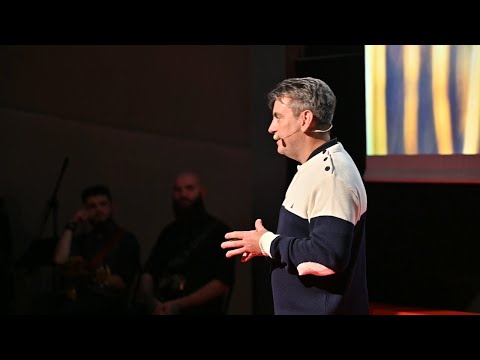
TEDx 2025
This talk reflects the long-term commitment behind Pelican Project and puts the plastic bottle challenge into a broader environmental perspective.
Design industrial models that reduce dependence on petroleum-based packaging and create useful local value.
Keep the sustainability promise connected to technical, economic and regulatory reality.
Support projects that protect biodiversity, human health and the credibility of environmental innovation.